English
  Deutsch
  Español
  Türkçe
  Italiano
  Русский
  Français
  Português
  العربية
  Українська
  Nederlands
With the rapid global growth of electric bicycles, transporting e-bikes safely has become a major concern for riders, rental fleets, and distributors. Compared with traditional bicycles, e-bikes are heavier, larger, and structurally more complex, which means not every roof mount bike rack is suitable.
As a professional bicycle frame manufacturer, we understand how frame geometry, material strength, and load distribution affect transportation safety. In this guide, we’ll explain how to choose the right roof mount bike rack for e-bikes, based on real engineering considerations.
Why E-Bikes Require Specialized Roof Mount Bike Racks
Before selecting a roof bike rack, it’s important to understand what makes e-bikes different:
- Higher weight: Most e-bikes weigh 20–30 kg (44–66 lbs), nearly double a standard road bike.
- Reinforced frames: E-bike frames often use thicker aluminum or steel tubing to support motors and batteries.
- Sensitive components: Mid-drive motors, battery mounts, wiring, and displays need protection during transport.
A standard roof mount bike rack designed for lightweight bicycles may fail under these conditions, leading to frame deformation, rack damage, or driving safety risks.
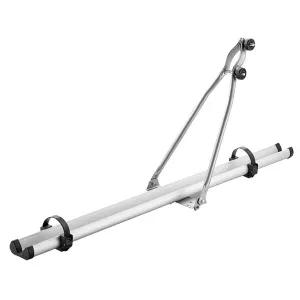
1. Check the Maximum Load Capacity (Critical for E-Bikes)
The single most critical factor when choosing a roof mount bike rack for e-bikes is maximum load capacity.
Most traditional bicycles weigh 8–15 kg (18–33 lbs), while modern electric bikes typically weigh 22–30 kg (48–66 lbs). Some full-suspension or cargo-style e-bikes can even exceed 32 kg (70 lbs) without accessories.
Professional Recommendation from a Frame Manufacturer:
- Minimum load rating: 25 kg (55 lbs) per bike → Suitable only for lightweight commuter e-bikes after battery removal
- Recommended load rating: 30 kg (66 lbs) or higher → Ideal for trekking, mountain, and long-range urban e-bikes
From an engineering standpoint, load rating is not just about static weight. During real driving conditions—such as emergency braking or highway cornering—the dynamic load can increase by 30–50% due to inertia and vibration.
If a rack is rated too close to the bike’s actual weight, stress tends to concentrate on:
- The bike’s top tube contact area
- The fork crown or head tube junction
- The rack’s clamping arm and roof rail interface
Over time, this may lead to micro-cracks in aluminum frames, clamp slippage, or premature rack failure.
2. Frame-Holding vs Fork-Mount: Which Is Better for E-Bikes?
Frame-Holding Roof Mount Bike Racks (Strongly Recommended)

Frame-holding systems secure the bike by clamping the down tube or top tube, which is particularly suitable for reinforced e-bike frames.
✔ Load is distributed across a larger structural area
✔ No need to remove wheels, saving 5–10 minutes per loading
✔ Better compatibility with disc brakes, thru-axles, and fenders
From our frame manufacturing experience, modern e-bike down tubes are designed to carry motor and battery loads of 50 kg or more, making them far more suitable contact points during transport.
These racks perform especially well with:
- Urban commuter e-bikes
- Trekking and touring e-bikes
- Mid-drive motor systems (Bosch, Shimano, Bafang types)
Fork-Mount Roof Bike Racks (Limited Use Cases)
Fork-mount racks require removal of the front wheel and fix the bike directly at the fork dropouts.
- Concentrates load on a small structural area
- Less suitable for suspension forks with added weight
- Increases installation complexity, especially for rental or fleet use
For example, a suspension fork rated for riding loads may still experience unintended torsional stress during transport when exposed to crosswinds at 100–120 km/h (60–75 mph).
As a result, fork-mount systems are best reserved for lightweight road bikes, not high-torque electric bicycles.
3. Compatibility with E-Bike Frame Geometry
Unlike traditional diamond frames, many e-bike designs prioritize battery integration and motor clearance, resulting in:
- Oversized down tubes (often 70–90 mm wide)
- Square or asymmetrical tube profiles
- Step-through or semi-open frame structures
When selecting a roof mount bike rack, confirm it supports:
- Tube diameters up to 80–100 mm
- Non-round or hydroformed aluminum tubes
- Step-through frames using adjustable clamping arms
From production and after-sales feedback, racks with:
- Wide, adjustable jaws
- Rubber-lined or thermoplastic clamp surfaces
reduce cosmetic frame damage by over 60% compared to metal-only clamps, especially on matte or anodized finishes.
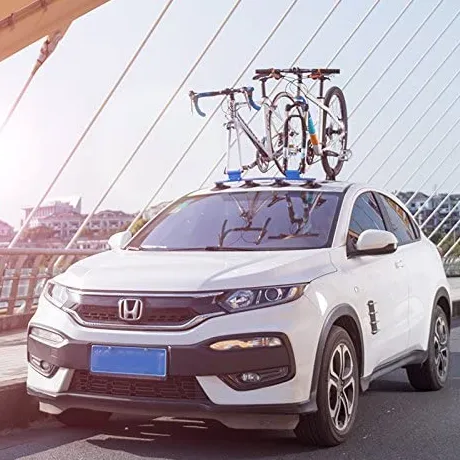
Custom Car Roof Bike Rack Suction Cup for 1,2,3Bikes
4. Aerodynamics & Driving Stability at Highway Speeds
Aerodynamics becomes far more important with e-bikes due to their larger frontal area.
At highway speeds of 90–110 km/h (55–68 mph):
- Wind resistance on an e-bike can be 20–30% higher than on a road bike
- Poorly designed racks amplify wind noise and roof-load vibration
This can result in:
- Noticeable steering sensitivity
- Increased fuel or energy consumption
- Driver fatigue on long trips
What to Look For in a Professional Roof Mount Bike Rack:
- Low-profile aluminum rails with smooth cross-sections
- Streamlined clamping arms that sit below handlebar height
- Integrated wind deflectors or aero covers
Well-designed systems can reduce wind noise by 3–5 dB, which is clearly noticeable during long-distance driving.
5. Safety Locking Systems: Protect Both Bike and Rack
Given the average e-bike value ranges from USD 1,500 to 4,000, theft prevention is not optional.
A professional roof mount bike rack should include:
- Bike-to-rack lock (integrated cable or arm lock)
- Rack-to-roof lock (prevents quick removal)
- Hardened steel or zinc-alloy lock cores
For B2B users—such as rental operators or distributors—dual locking systems also help meet insurance and liability requirements, especially when transporting multiple bikes.

6. Practical Tip from Manufacturers: Remove the Battery First
Even when using a heavy-duty roof mount bike rack, we strongly recommend:
Remove the e-bike battery before loading
A typical e-bike battery weighs:
- 2–3 kg (4.4–6.6 lbs) for compact systems
- Up to 4–5 kg (9–11 lbs) for long-range batteries
Removing the battery:
- Reduces roof load by 10–15%
- Lowers the vehicle’s center of gravity
- Minimizes vibration exposure to lithium cells
From long-term testing, this simple step can extend rack component lifespan and reduce frame clamp wear, especially for frequent travelers.
Best Applications for E-Bike Roof Mount Bike Racks
Roof mount bike racks for e-bikes are ideal for:
- SUV and crossover vehicles with factory roof rails
- Outdoor enthusiasts transporting 1–2 e-bikes
- Rental companies offering premium e-bike travel solutions
- Cyclists who need rear access without hitch obstruction
For frequent heavy transport, some users may still prefer hitch-mounted solutions—but a properly selected roof mount bike rack remains a clean, versatile option.
Final Thoughts
From a bicycle frame manufacturer’s standpoint, the best roof mount bike rack for e-bikes is not defined by brand name alone, but by:
- Verified load capacity
- Frame-friendly clamping design
- Structural stability at speed
- Proven compatibility with modern e-bike frames
Choosing the right rack protects not only your e-bike, but also your vehicle—and your investment.
Looking for a Professional E-Bike Transport Solution?
If you are a distributor, brand owner, or fleet operator looking for e-bike-compatible roof mount bike racks or custom bicycle frame solutions, feel free to contact our engineering team. We provide OEM/ODM support, structural consultation, and long-term supply solutions for the global cycling market.