English
  Deutsch
  Español
  Türkçe
  Italiano
  Русский
  Français
  Português
  العربية
  Українська
  Nederlands
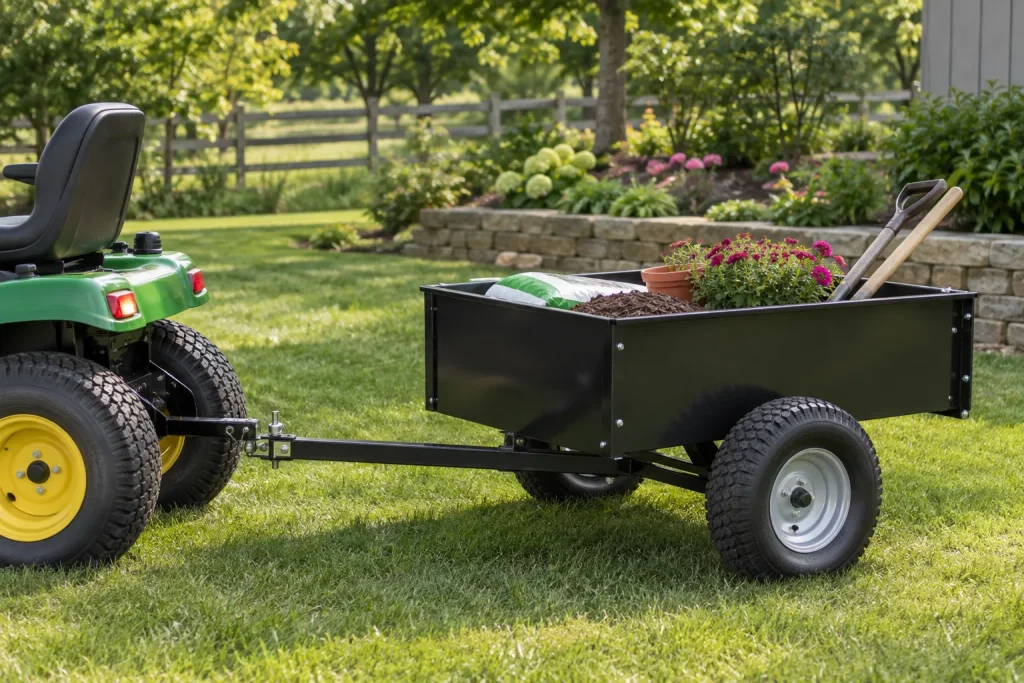
 Garden trailers are widely used for moving tools, plants, soil, firewood and other materials around gardens, farms and larger properties. Designed to be towed behind lawn tractors, riding mowers or ATVs, they provide a practical solution for everyday outdoor hauling.
Although the structure may appear simple—an open cargo body, two wheels and a tow bar—the performance of a garden trailer depends on how these components work together.
Cargo-body construction affects load support, axle position influences balance, wheels determine how the trailer handles outdoor surfaces, and the tow bar and hitch affect maneuverability and connection with the towing vehicle.
For buyers looking for a garden trailer manufacturer, these structural details are more useful indicators of product quality than appearance alone.
Understanding the Complete Garden Trailer Structure
A tow-behind garden trailer should be considered as a complete load-carrying system rather than a collection of separate components.
The main structure includes the cargo body, supporting frame, axle and wheels, tow bar and hitch connection. Each component has a different role.
| Key Area | Main Function | What to Evaluate |
| Cargo Body | Contains and supports the load | Size, side-wall design, floor construction and rigidity |
| Frame | Supports the body and transfers load | Structural layout, reinforcement and connection points |
| Axle & Wheels | Carry the trailer and cargo | Position, wheel specification and load suitability |
| Tow Bar | Transfers pulling forces | Length, rigidity and frame connection |
| Hitch | Connects to towing equipment | Dimensions, security and compatibility |
| Surface Finish | Protects exposed steel | Preparation, coating coverage and consistency |
These areas cannot be evaluated independently.
A strong cargo body cannot compensate for an inadequate frame or poorly positioned axle. Similarly, wheel size should be selected according to the trailer’s intended load and working environment rather than appearance alone.
Cargo Body Design: Balancing Space, Strength and Weight
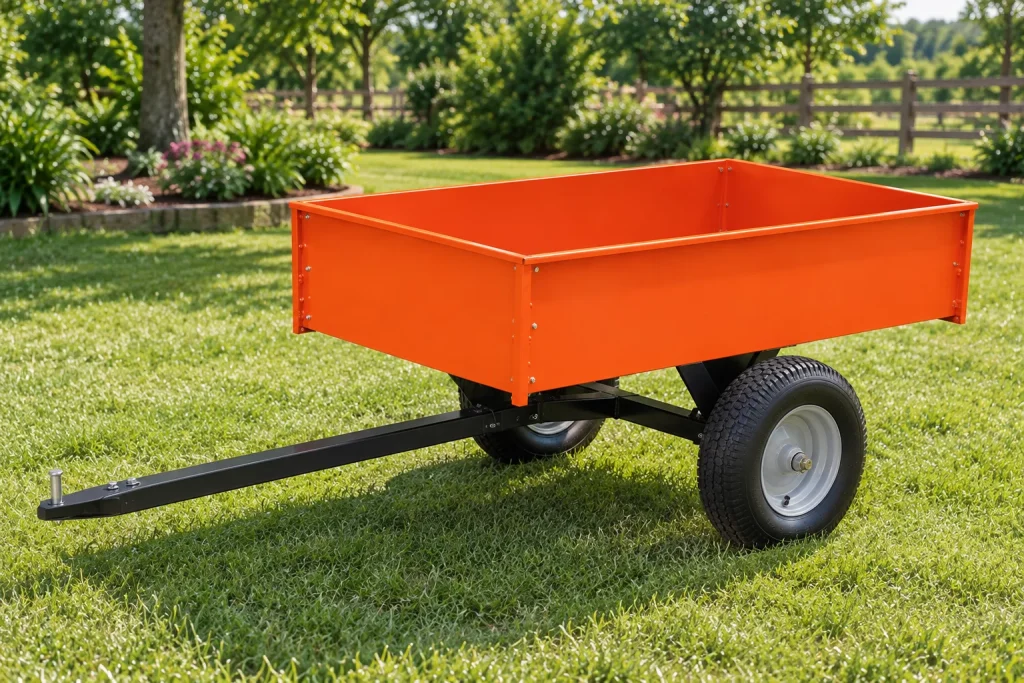
The open cargo body is the main working area of a garden trailer.
Depending on the application, it may carry garden tools, plants, bags of soil, fertilizer, firewood or other materials used in property maintenance.
Useful cargo volume is important, but simply making the body larger is not necessarily better.
Body Dimensions and Side Walls
Body length, width and side-wall height determine the usable cargo space.
Higher side walls can increase volume, while the overall dimensions still need to remain suitable for maneuvering behind a lawn tractor, riding mower or ATV.
The body should therefore be designed around the intended application rather than maximum volume alone.
Floor and Panel Rigidity
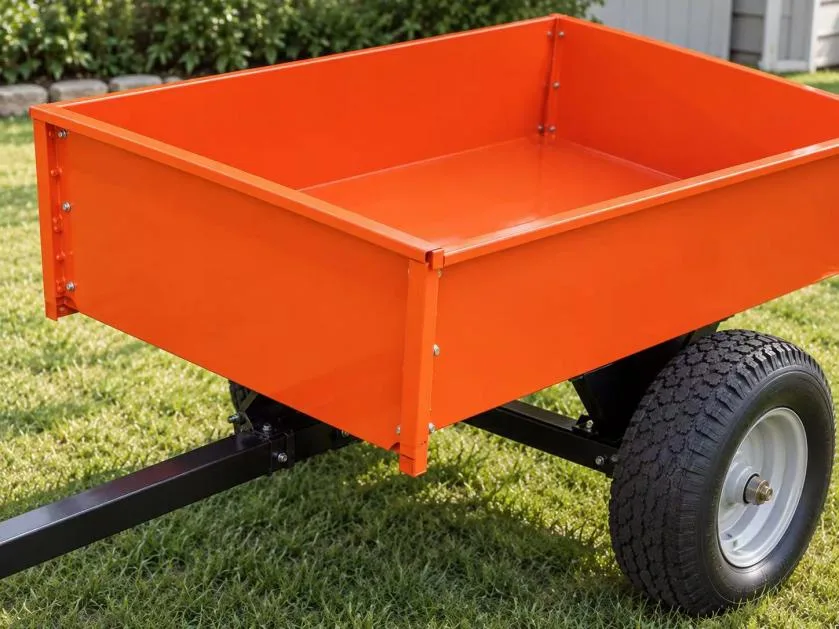
The floor carries the cargo and transfers its weight into the supporting structure underneath.
Side panels need sufficient rigidity to maintain their shape during repeated loading and transportation.
For a steel garden trailer, this depends on several factors:
- material selection;
- panel geometry;
- forming accuracy;
- folded edges;
- body-to-frame connection.
Increasing steel thickness everywhere can add unnecessary weight and cost. A better approach is to provide sufficient material and reinforcement where the structure actually requires it.
The objective is to balance:
usable cargo space + structural rigidity + product weight + manufacturing efficiency
Load Distribution, Axle Position and Wheels
When cargo is placed inside a garden trailer, the load passes through the complete structure:
Cargo → Cargo Body → Supporting Structure → Axle & Wheels → Ground
Part of that load also affects the tow bar and hitch.
This is why axle position should be considered together with the cargo body rather than treated as an isolated specification.
Axle Position and Trailer Balance
The relationship between cargo position and axle position influences how much load is transferred toward the hitch.
A suitable layout helps maintain predictable towing and avoids unnecessary load at the connection with the towing vehicle.
This is particularly relevant when the trailer is used behind compact equipment such as lawn tractors and riding mowers.
Wheel Selection for Outdoor Surfaces
Garden trailers commonly travel over:
- grass;
- gravel;
- compacted soil;
- garden paths;
- uneven property surfaces.
Wheel diameter, tire width, tire construction and load rating can all affect rolling performance.
Pneumatic tires are practical for many garden applications because they provide cushioning on uneven surfaces. Larger-diameter wheels can also make it easier to travel over minor surface irregularities.
However, the appropriate wheel specification should always be selected according to the intended load, terrain and overall trailer design.
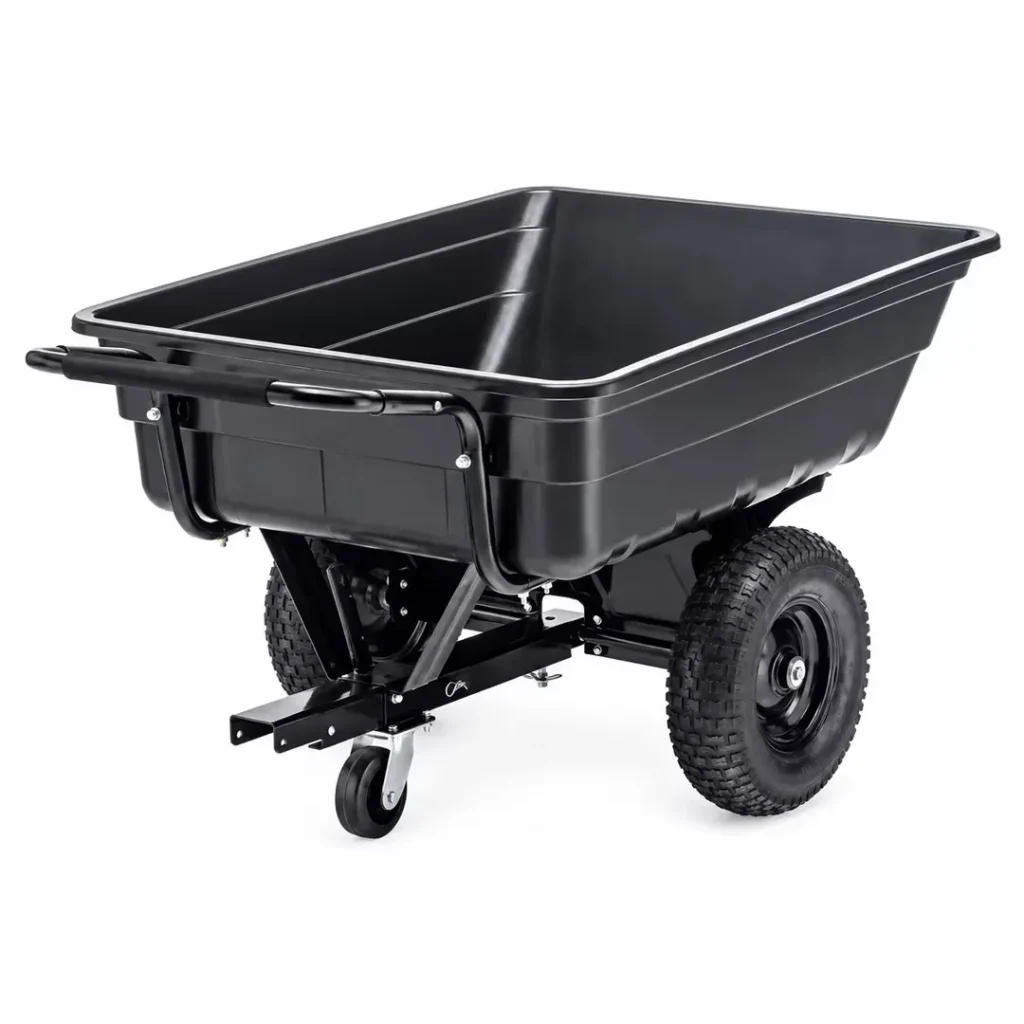
Tow Bar and Hitch Design
The tow bar connects the trailer structure to the lawn tractor, riding mower or ATV.
During use, it transfers pulling forces while also responding to turning, starting, stopping and movement over uneven ground.
Its design therefore affects both structural performance and maneuverability.
| Tow-Behind Detail | Why It Matters |
| Tow Bar Length | Influences turning clearance and maneuverability |
| Tow Bar Profile | Contributes to structural rigidity |
| Frame Connection | Transfers towing forces into the trailer structure |
| Hitch Geometry | Determines connection with the towing vehicle |
| Retaining Method | Helps keep the connection secure during use |
| Alignment | Helps the trailer track correctly behind the towing vehicle |
Tow-bar length is particularly important.
Adequate distance between the towing vehicle and trailer provides turning clearance, while the tow bar still needs sufficient rigidity and a reliable connection to the main structure.
The hitch should also match the intended towing equipment. For a customized product, connection dimensions should therefore be confirmed during development rather than assuming that one configuration fits every lawn tractor or ATV.
Lawn Tractor vs. ATV: Different Working Conditions
A garden trailer can be used with different towing equipment, but the operating environment may change.
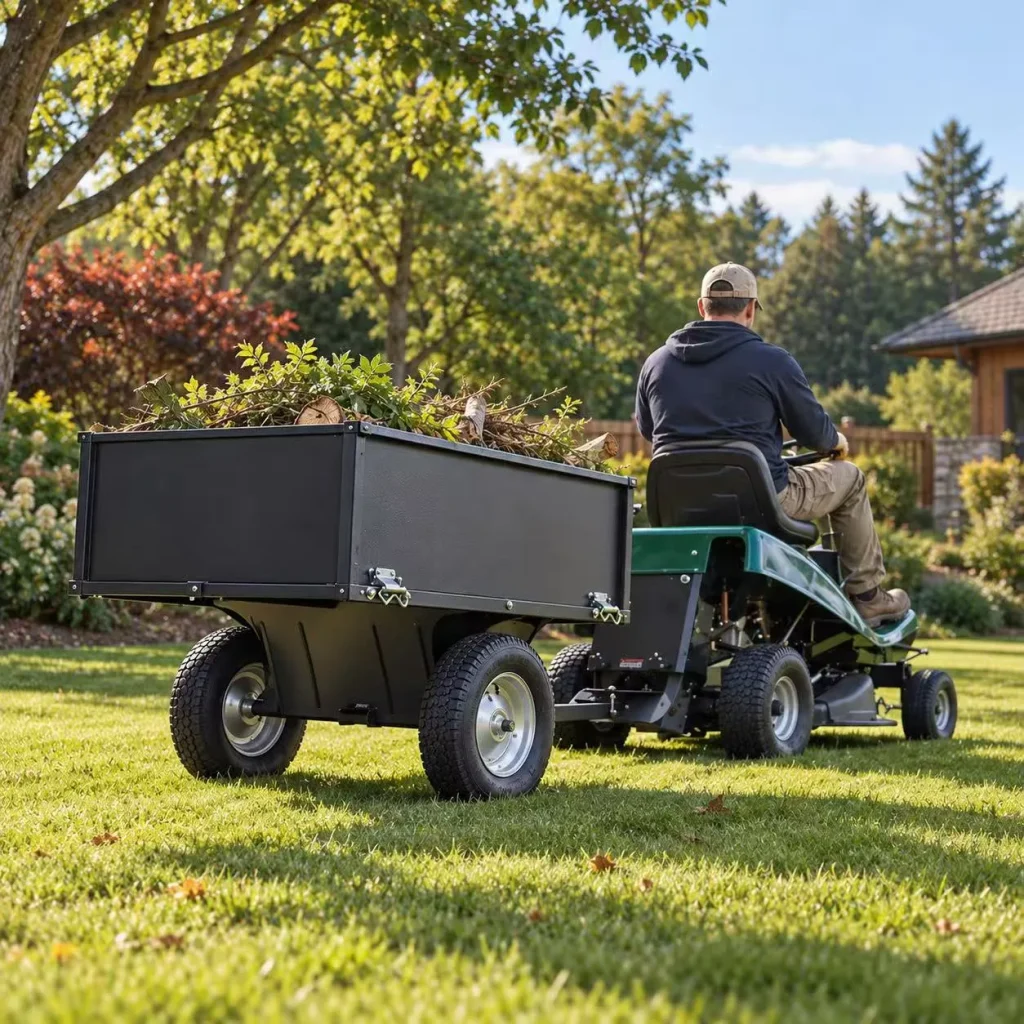
A trailer behind a lawn tractor or riding mower will often be used around lawns, gardens and landscaped properties. ATV applications may involve gravel, farm areas or more uneven outdoor terrain.
| Application Factor | Lawn Tractor / Riding Mower | ATV |
| Typical Use | Lawn, garden and property maintenance | Garden, farm and utility hauling |
| Surface | Grass, paths and relatively even ground | Grass, gravel and rougher outdoor surfaces |
| Maneuverability | Important around gardens and landscaping | Important across larger outdoor areas |
| Wheel Requirement | Stable low-speed rolling | Greater consideration for uneven surfaces |
| Structural Consideration | Repeated everyday hauling | Rougher terrain may introduce more vibration |
| Hitch | Match tractor/mower connection | Match intended ATV connection |
Defining the intended application before production makes it easier to select appropriate wheels, hitch dimensions and structural specifications.
It also avoids treating every garden trailer as a generic “universal” model.
Manufacturing Quality Behind a Reliable Garden Trailer
Once the basic product structure has been established, manufacturing consistency determines whether the same design can be reproduced reliably in volume.
For a steel garden trailer, production may involve:
Material Preparation → Cutting & Forming → Welding → Surface Preparation → Coating → Assembly → Inspection → Packaging
Fabrication and Welding Accuracy
The frame establishes the basic geometry of the trailer.
Variation during fabrication can affect:
- axle position;
- wheel alignment;
- cargo-body installation;
- tow-bar alignment;
- final assembly.
Fixtures and dimensional inspection are therefore important when moving from a prototype to batch production.
A good sample is only useful if the same geometry can be maintained across subsequent units.
Surface Treatment
Garden equipment regularly encounters moisture, dirt, grass residue and outdoor storage conditions.
For steel components, surface treatment contributes to both appearance and corrosion protection.
Coating quality should be consistent around areas such as welds, corners, panel edges, holes and other exposed sections.
Repeatable Assembly
Wheel installation, fasteners, hitch components and other assembly points should remain consistent throughout a production batch.
For B2B buyers, this consistency affects not only the finished product but also replacement parts, packaging and future repeat orders.
| Manufacturing Capability | Why It Matters |
| Steel Fabrication | Controls body, frame and tow-bar construction |
| Welding Fixtures | Helps maintain geometry across production units |
| Dimensional Inspection | Controls axle, wheel and hitch positioning |
| Surface Treatment | Affects finish consistency and outdoor protection |
| Assembly Control | Reduces variation between finished products |
| Custom Development | Supports different market and application requirements |
| Packaging Development | Helps protect products during international transport |
Key Specifications to Confirm Before Production
Before sample development or mass production, the main product requirements should be clearly defined.
This is especially important for customized and private-label projects because differences in intended load, towing equipment and market positioning can require different specifications.
| Specification | Information to Confirm |
| Cargo Body | Length × width × height |
| Rated Load | Required working capacity |
| Body / Frame Material | Required material and thickness |
| Wheels | Tire size, type and required load rating |
| Axle | Required capacity and mounting position |
| Tow Bar | Length and structural requirements |
| Hitch | Connection type and dimensions |
| Surface Finish | Coating requirement and color |
| Branding | Logo, product label and other identification |
| Packaging | Assembly condition, carton and shipping requirements |
For an existing product, these requirements can be established from a reference sample or technical drawing.
For a new model, defining them early helps avoid unnecessary structural changes after tooling, sampling or production preparation has already begun.
From Garden Trailer Design to Production with EZLEE
EZLEE supports OEM and ODM garden trailer projects for importers, distributors and garden-equipment brands.
Whether a project starts from an existing sample, technical drawing or new product specification, we can support the development of key details including cargo-body dimensions, frame structure, wheel and axle configuration, tow-bar and hitch design, surface finish, branding and packaging.
From sample development to batch production, the focus is on turning the confirmed specification into a consistent, production-ready garden trailer.
Looking for a garden trailer manufacturer for your next project? Contact EZLEE to discuss your specifications, customization requirements and target order quantity.