English
  Deutsch
  Español
  Türkçe
  Italiano
  Русский
  Français
  Português
  العربية
  Українська
  Nederlands
 A motorcycle basic wheel chock is a simple but important piece of motorcycle workshop and transport equipment. It helps position the motorcycle wheel, reduce unwanted movement, and keep the motorcycle upright during maintenance, storage, or transportation.
For repair shops, distributors, wholesalers, and motorcycle equipment brands, however, choosing a wheel chock should involve more than comparing prices. Material, construction, stability, wheel compatibility, surface treatment, packaging, and supplier quality control can all affect product performance and long-term customer satisfaction.
So, what makes a good motorcycle wheel chock?
Here are seven important features B2B buyers should evaluate when sourcing motorcycle wheel chocks.
7 Features Buyers Should Check for Good Motorcycle Basic Wheel Chocks
1. Durable Steel Construction
The first feature to check is the material and structural construction.
A motorcycle wheel chock needs to withstand repeated loading and unloading while maintaining its shape and stability. Steel is widely used for basic wheel chocks because it provides a practical balance between strength, durability, manufacturing cost, and scalability for wholesale production.
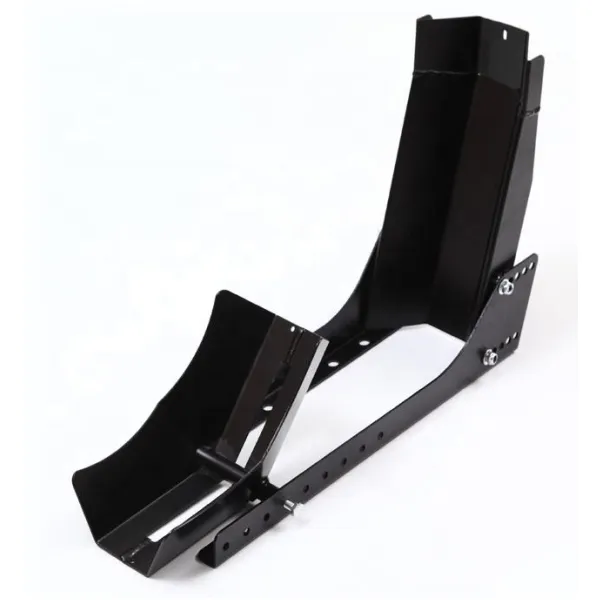
For commercial buyers, it is important to look beyond the material name alone. The design of the frame, tube or plate structure, welding points, base geometry, and overall construction can all influence the finished product’s stability.
A reliable motorcycle wheel chock should therefore have:
- A rigid steel structure
- Properly formed components
- Consistent welding quality
- A stable base
- Accurate assembly
- Appropriate load-bearing design
For private-label and OEM projects, buyers should also confirm whether the manufacturer can modify the structure according to the intended motorcycle types and application.

2. A Stable Base for Workshop and Transport Applications
A wheel chock is only useful if it can maintain a stable position when the motorcycle wheel enters the cradle.
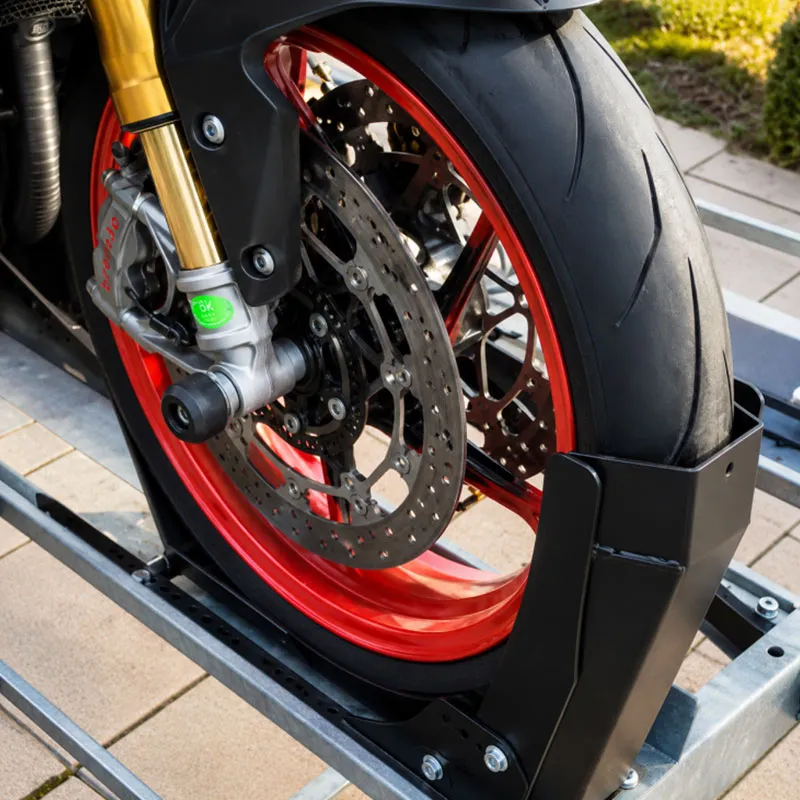
For professional applications, buyers should consider where the wheel chock will be installed and how it will be used.
A properly designed base can help reduce unwanted movement while the motorcycle is being positioned or secured.
For trailer applications, the wheel chock should also be compatible with the trailer floor and appropriate mounting hardware. A wheel chock itself should not be treated as the complete motorcycle restraint system; during transportation, appropriate tie-down straps and other restraints should be used according to the application. Manufacturer instructions from major motorcycle brands similarly emphasize using suitable tie-downs during transport.
3. Correct Wheel and Tire Compatibility
One of the most important buying factors is fitment.
Motorcycles have different front-wheel diameters, tire widths, fender designs, and geometries. Therefore, a wheel chock that works well for one motorcycle may not be appropriate for another.
Before purchasing or sourcing a motorcycle basic wheel chock, buyers should verify:
- Wheel diameter
- Tire width
- Front-wheel configuration
- Fender clearance
- Chock opening
- Cradle dimensions
- Installation space
This is particularly important for distributors and wholesalers that sell equipment for multiple motorcycle categories.
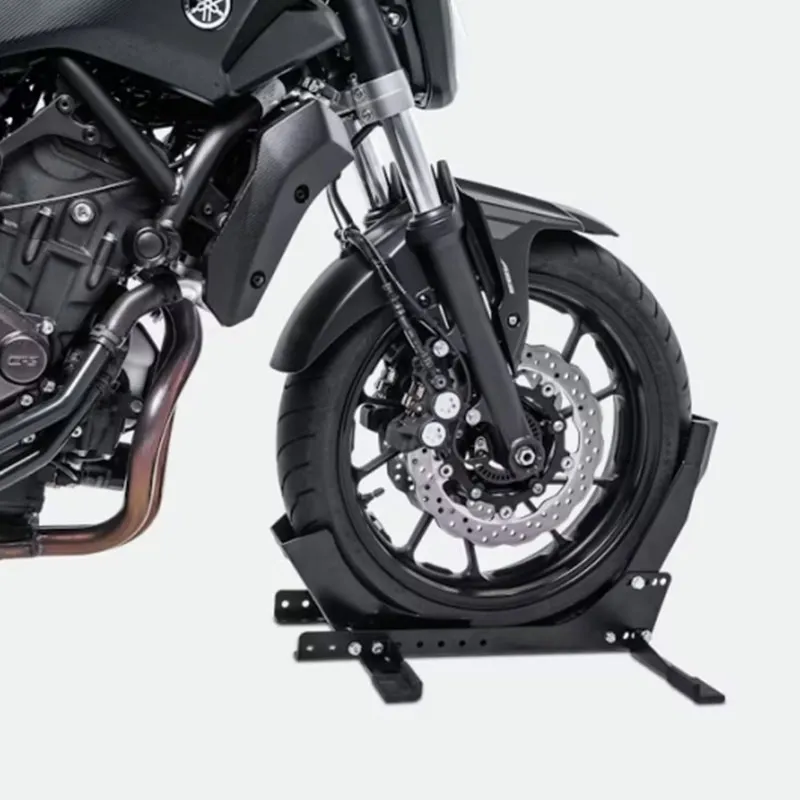
A useful product specification should clearly state the applicable dimensions instead of simply claiming that a chock is “universal.” Current motorcycle wheel chock products on the market commonly specify wheel diameter and tire-width ranges because these dimensions directly affect compatibility.
4. Reliable Powder-Coated Surface Treatment
The surface finish is another feature B2B buyers should not overlook.
Motorcycle wheel chocks are frequently used in garages, workshops, trailers, and other environments where the equipment may be exposed to moisture, dirt, oil, or repeated handling. For this reason, both the material and surface treatment should be clearly evaluated before purchasing.
EZLEE’s Motorcycle Basic Wheel Chock is made from steel and features a powder-coated surface. The steel construction provides a practical balance of strength and durability, while the powder coating helps create a consistent, protective finish and improves the product’s overall appearance.
For OEM/ODM projects, the surface finish can also be adapted to a customer’s branding or product-line requirements, subject to the manufacturer’s production capabilities.
5. Practical Dimensions and Easy Handling
A good motorcycle wheel chock does not need to be unnecessarily large or heavy.
For workshops, distributors, and transport-equipment suppliers, the product should provide a reasonable balance between structural strength, physical size, handling, and shipping efficiency.
Specifications are particularly relevant to B2B buyers because product dimensions and packaging dimensions affect:
- Warehouse storage
- Container utilization
- Shipping costs
- Retail packaging
- Handling efficiency
- Wholesale logistics
When comparing suppliers, buyers should evaluate the complete product-and-packaging specification rather than looking only at the unit purchase price.
6. Consistent Manufacturing Quality
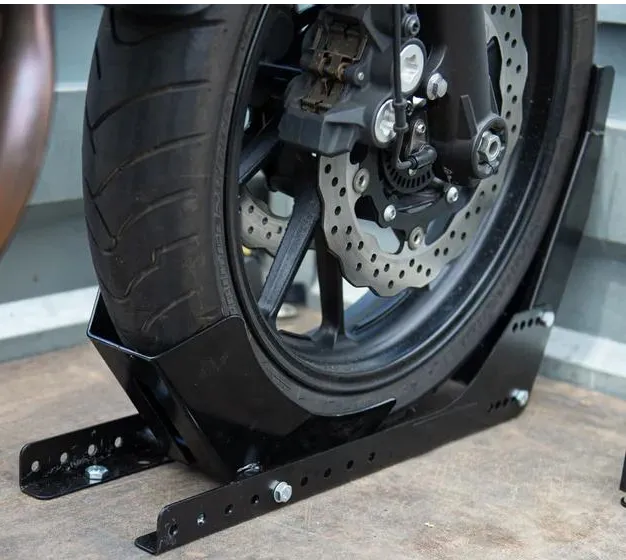
For a motorcycle equipment distributor, receiving one good sample is not enough. The real question is whether the supplier can maintain consistent quality across mass production.
This is especially important for OEM and private-label buyers because inconsistent dimensions or finishing can result in customer complaints, returns, and additional logistics costs.
EZLEE applies whole-process quality control to its manufacturing operations, including loading-capacity testing, sampling inspection, and mass-production inspection. This approach helps ensure that each batch of motorcycle wheel chocks maintains consistent performance, finish, and specifications, giving distributors and OEM buyers greater confidence when placing repeat orders.
7. OEM/ODM and Customization Capability
For B2B buyers, the best motorcycle wheel chock is not necessarily the product with the most features. It is the product that matches the target market, motorcycle applications, price positioning, and sales channel.
This is where OEM/ODM capability becomes valuable.
A capable motorcycle wheel chock manufacturer should be able to discuss:
- Product dimensions
- Material selection
- Structural modifications
- Surface finish
- Packaging
- Product labeling
- Logo requirements
- Sample development
- Production quantities
- Quality standards
EZLEE provides tailored design and sample support for its motorcycle basic wheel chock and identifies OEM, ODM, wholesale, and manufacturing services as part of its motorcycle accessories offering.
For buyers developing their own motorcycle equipment range, this can be more valuable than simply purchasing an existing off-the-shelf product.
Choose the Right Motorcycle Wheel Chock Supplier
For B2B buyers, evaluating these factors before placing a bulk order can help reduce quality risks and ensure the product is appropriate for the intended motorcycle and application.
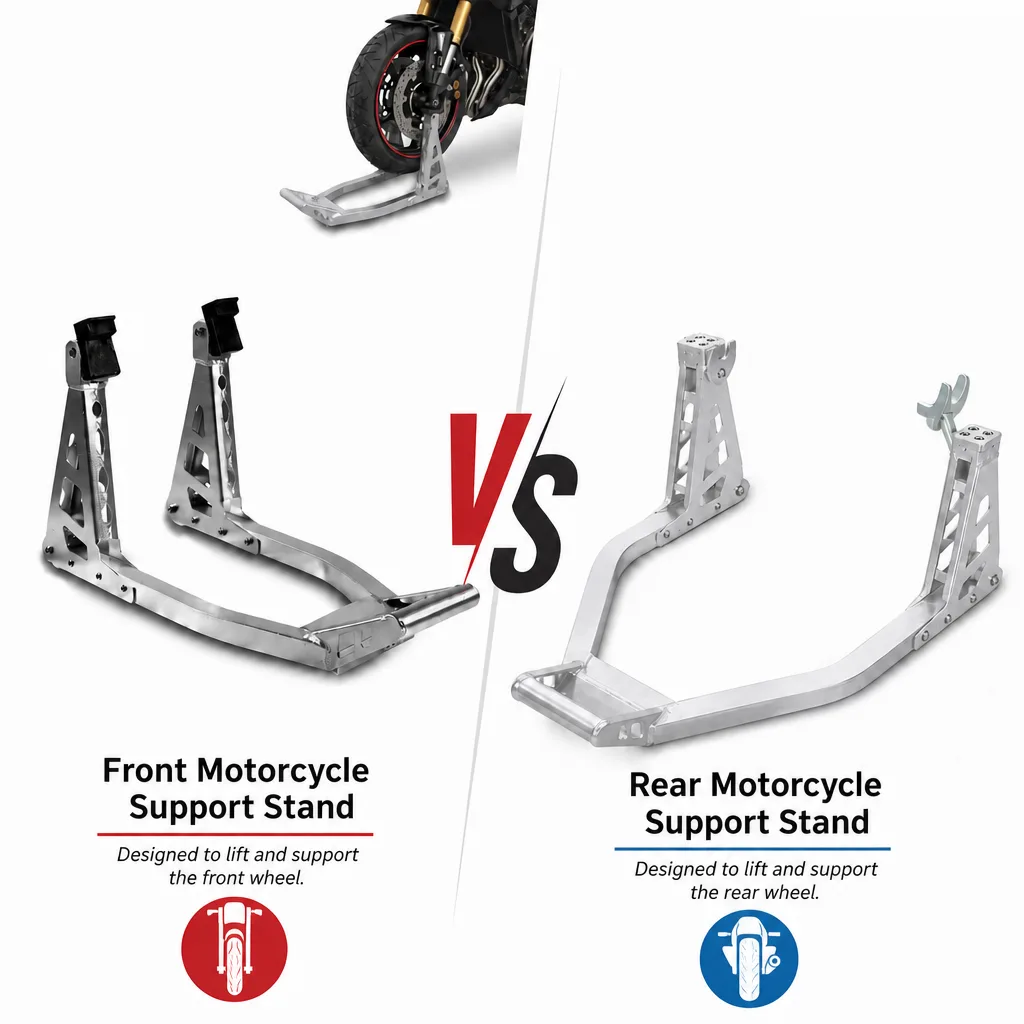
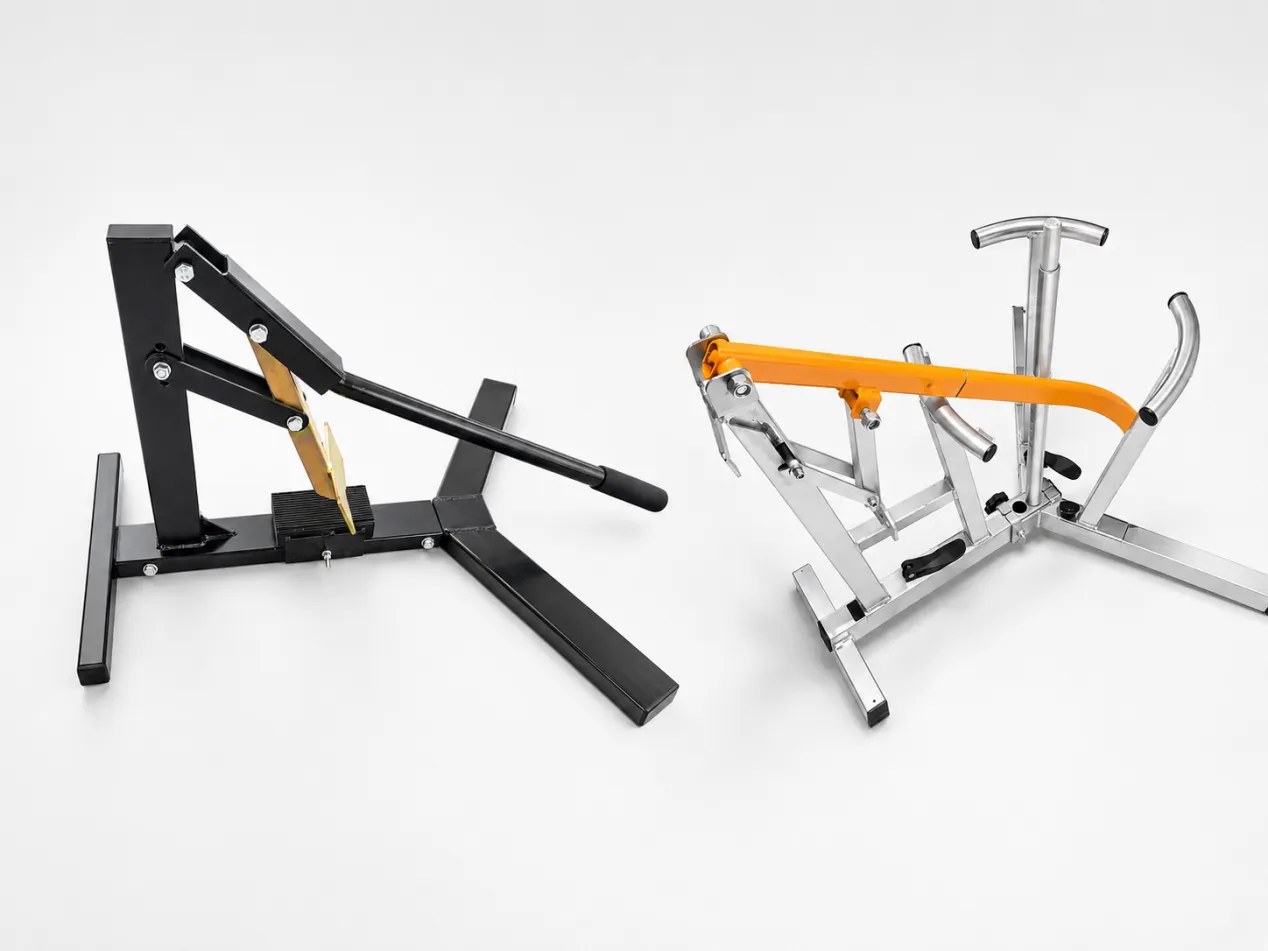
EZLEE supplies motorcycle accessories including motorcycle wheel chocks, motorcycle stands, motorcycle lifts, motorcycle dollies, tyre balancers, and tyre changers, with OEM/ODM and wholesale capabilities. Its Motorcycle Basic Wheel Chock is made from steel with a powder-coated finish and is available with tailored design and sample support.
Looking for a motorcycle wheel chock for wholesale, OEM, or private-label distribution? Contact EZLEE with your target motorcycle types, required dimensions, quantity, packaging, and customization requirements to discuss a suitable solution.
Motorcycle Basic Wheel Chock Buying Checklist
Before placing a bulk order, B2B buyers can use the following checklist:
| Feature | What to Check |
| Material | Steel type and structural design |
| Construction | Welding, frame rigidity, assembly quality |
| Compatibility | Wheel diameter, tire width, and clearance |
| Base | Stability and mounting requirements |
| Surface | Powder coating and finish consistency |
| Dimensions | Product size and installation space |
| Packaging | Package size, protection, and shipping efficiency |
| Quality Control | Inspection and testing procedures |
| Customization | OEM/ODM, logo, color, packaging |
| Supplier Capability | Production capacity, delivery, and after-sales support |