English
 Deutsch
 Español
 Türkçe
 Italiano
 Русский
 Français
 Português
 العربية
 Українська
 Nederlands
Before buying a motorcycle wheel balancer, you need to know whether your wheel will mount correctly and rotate freely. A matching wheel-size label is only the starting point. Shaft dimensions, hub design, available clearance and centering accessories all affect the fit.
Checking motorcycle wheel balancer compatibility in a clear order makes the decision easier: start with the mounting opening, check the complete wheel dimensions, identify any required adapters, then confirm the specifications and supplied parts.

1. Axle Diameter: Will the Balancer Shaft Fit Your Wheel?
Axle diameter is the first measurement to check when assessing motorcycle wheel balancer compatibility. The balancer shaft must pass through the wheel’s mounting opening, and the centering components must hold the wheel securely.
For a conventional wheel with bearings, measure the bearing’s inner diameter. If sleeves or spacers remain installed during balancing, check whether they reduce the available opening.
When comparing motorcycle wheel balancer axle size, distinguish between:
- Motorcycle axle diameter: the diameter of the original axle fitted to the motorcycle.
- Balancer shaft diameter: the diameter of the shaft used to support the wheel during balancing.
- Wheel opening diameter: the available opening through which the balancer shaft passes.
These measurements do not necessarily need to match. Some static balancers use a smaller shaft with centering cones that locate the wheel on the shaft. However, a shaft passing through the opening does not guarantee a correct fit—the cones must also seat properly and keep the wheel centered.
2. Wheel Size: Will the Complete Wheel Fit the Stand?
After checking the axle diameter, confirm that the complete wheel and tire assembly has enough space to rotate freely.
Start by distinguishing rim diameter from overall tire diameter. A wheel described by its rim size becomes larger once the tire is fitted. The overall tire diameter determines how much clearance is needed between the shaft and the stand’s base.
Check these dimensions:
- Overall tire diameter: the tire must clear the base throughout a complete rotation.
- Wheel and tire width: the assembly must fit between the stand’s sides without rubbing.
- Hub width: the hub must leave enough room for the required centering components.
- Clearance around projecting parts: brake discs and sprockets must not contact the supports or frame.
If a product lists a wheel-size range, confirm whether it refers to rim diameter or overall tire diameter. Do not assume that a matching nominal size guarantees compatibility.
Check the maximum permitted wheel weight separately. A wheel that fits within the stand’s dimensions must also remain within its stated load capacity.
3. Adapter Requirements: Can the Wheel Be Centered Correctly?
The final check is whether the supplied mounting components can center and support your wheel. A suitable shaft diameter and sufficient wheel clearance are essential, but the mounting arrangement must also match the hub design.
Depending on the application, you may need:
- Centering cones: fit against suitable wheel openings to keep the wheel centered on the shaft.
- Spacers: position components or maintain the separation required by the mounting instructions.
- Special adapters: provide the correct mounting interface for wheels that cannot use standard cones.
Conventional wheels with bearings may work with the supplied cones, provided the cone size and contact surfaces are suitable. Single-sided swingarm rear wheels and unusual hubs may require dedicated adapters.
Check that the cones contact the intended mounting surfaces rather than relying on flexible seals for support. Do not assume that a larger cone or an improvised sleeve will provide accurate centering.
Before ordering, confirm the included cone sizes, available adapters and any accessories sold separately. For an unfamiliar hub, provide the supplier with the motorcycle make, model, year and clear photographs of both sides of the wheel.
4. Confirm the Product Specifications Before Ordering
Bring the measurements and accessory requirements together before making a purchase. A useful inquiry should include:
- Motorcycle make, model, year, and whether the wheel is front or rear.
- Bearing bore or mounting-hole dimensions.
- Hub width, overall tire diameter and complete assembly width.
- Complete wheel weight.
- Photographs of both sides of the hub.
- Any known special mounting requirements.
Then request confirmation of the balancer’s shaft diameter, wheel-clearance limits, maximum wheel weight and included accessories.
Why Choose EZLEE for Your Motorcycle Wheel Balancer?
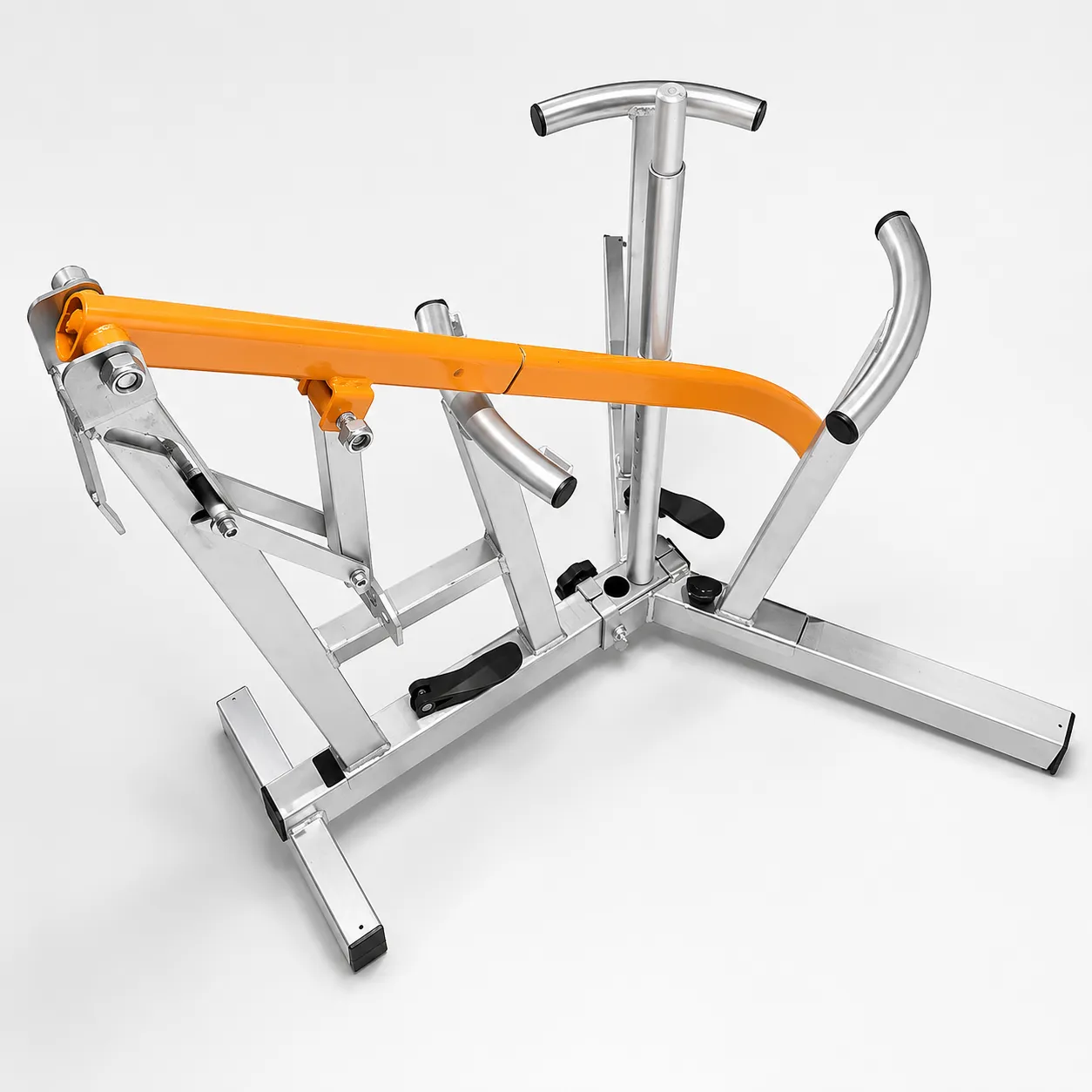
At EZLEE, we combine practical product design with OEM/ODM support for motorcycle accessory brands, distributors and wholesalers. Our motorcycle wheel balancer features a powder-coated steel frame for durability, precision ball bearings for smooth rotation, and sturdy feet for stable support.
Beyond the product itself, we help you prepare for your market:
- Compatibility review: Share your wheel dimensions and hub photos so we can review the mounting requirements with you.
- OEM/ODM support: Discuss product design, branding and packaging requirements for your business.
- Quality control: We work with your agreed specifications and quality requirements throughout production.
Explore our Motorcycle Wheel Balancer and contact us to discuss your application and purchasing requirements.
Frequently Asked Questions
Does the balancer shaft need to match the motorcycle axle diameter?
Not necessarily. Some designs use a smaller shaft with suitable centering cones. Follow the equipment manufacturer’s mounting requirements.
Can one balancer handle both front and rear wheels?
Possibly, but assess them separately. Their mounting openings, hub widths and adapter requirements can differ.
Does “universal” mean every motorcycle wheel will fit?
No. Check the published dimensions and mounting arrangement for the specific wheel. If information is missing, request confirmation before ordering.