English
 Deutsch
 Español
 Türkçe
 Italiano
 Русский
 Français
 Português
 العربية
 Українська
 Nederlands
When transporting a motorcycle on a trailer, how should the front wheel chock be selected and installed? The answer depends on three factors: tire and wheel fitment, secure mounting to the trailer deck, and proper tie-down positioning. A motorcycle front wheel chock helps hold the front wheel in position, but it should work together with suitable straps and trailer anchor points rather than being treated as the complete restraint system.
For motorcycle equipment distributors, repair shops, trailer manufacturers, and OEM buyers, these details are also important when selecting a wheel chock for a product range.
What Is a Motorcycle Front Wheel Chock?
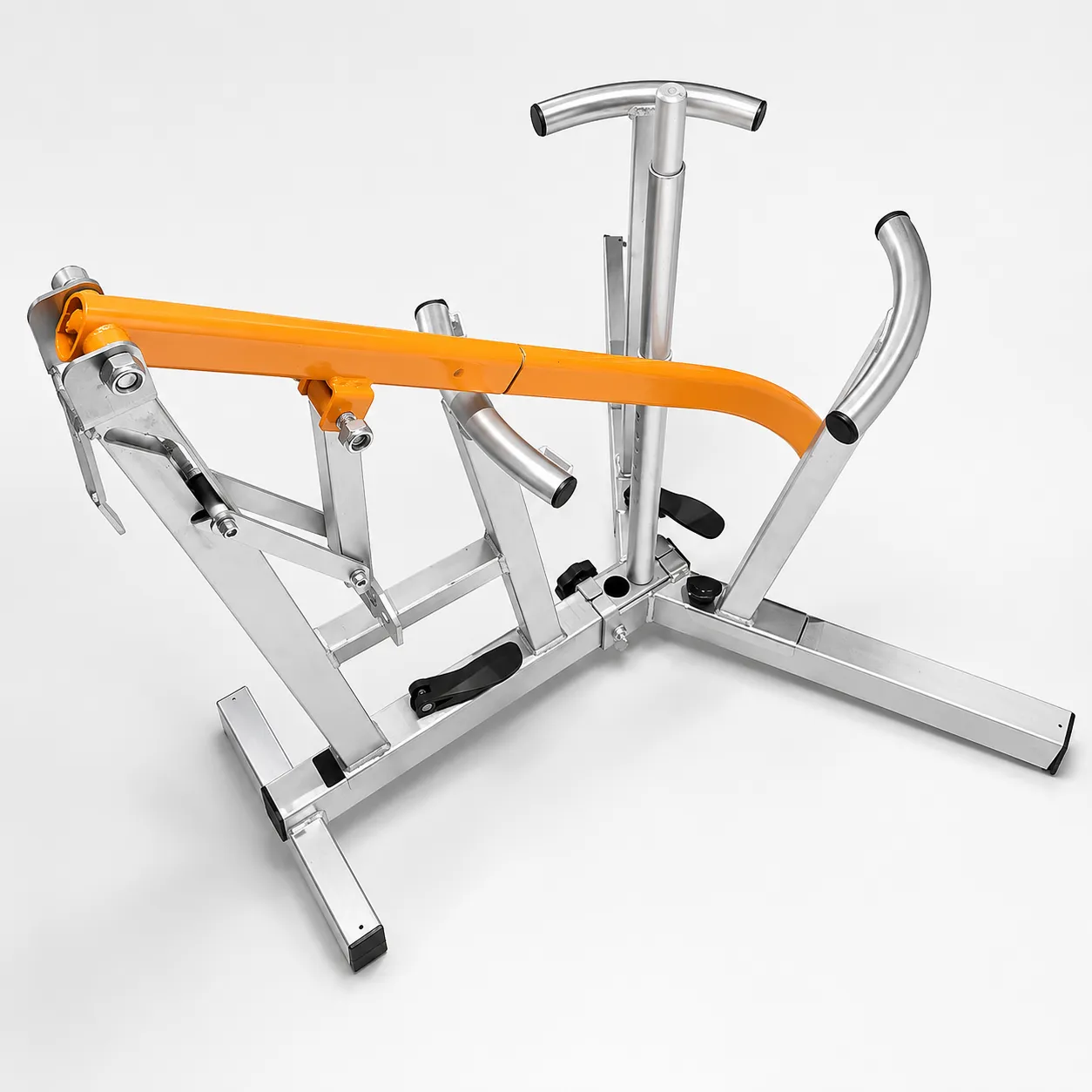
A motorcycle front wheel chock is a support structure that receives the motorcycle’s front tire and helps prevent forward, backward, and lateral movement during loading, storage, servicing, or transportation.

For trailer applications, the chock needs to do more than simply hold the tire upright. Its geometry, mounting points, tire compatibility, and relationship with the tie-down anchors all affect how the motorcycle is secured.
Manufacturer instructions for motorcycle wheel chocks commonly specify that the motorcycle should be positioned with the front tire centered in the cradle and secured with appropriate straps when transported.

How to Choose a Motorcycle Front Wheel Chock for a Trailer?
B2B buyers should check the following specifications before selecting a model:
| Selection Factor | What to Check |
| Tire Width | Confirm that the cradle accommodates the intended front tire range |
| Wheel Diameter | Check compatible wheel and rim sizes |
| Chock Geometry | Make sure the tire seats securely without excessive clearance |
| Mounting Method | Check whether the chock is fixed, removable, bolt-on, or bracket-mounted |
| Trailer Deck | Verify that the deck can support the mounting hardware and motorcycle load |
| Tie-Down Position | Leave enough space for straps to pull the motorcycle securely into the chock |
| Motorcycle Clearance | Check front fender, fork, fairing, and other clearance requirements |
| Load Requirements | Consider the motorcycle weight and the trailer’s rated capacity |
Fitment should not be based on motorcycle model name alone. Front tire width, wheel diameter, fender geometry, and the actual chock cradle dimensions should be checked together. Manufacturer documentation, for example, provides different cradle settings for different tire widths and wheel diameters.
How Should a Motorcycle Front Wheel Chock Be Mounted?
A trailer-mounted wheel chock should be attached to a structurally suitable section of the trailer deck using the manufacturer’s specified hardware and mounting pattern.
Before drilling or bolting the chock into position, check:
- Trailer floor construction and thickness
- Available mounting area
- Location of crossmembers or structural supports
- Clearance around the front wheel
- Access to the underside of the deck
- Position of tie-down anchors
- Motorcycle and trailer weight distribution
The mounting location should also leave sufficient space for the entire chock and the motorcycle to be loaded correctly. Some manufacturer installation instructions specify minimum clearance between the mounting bracket and the front of the trailer or an obstruction, demonstrating why installation dimensions should be checked before drilling.
For production trailer applications, the mounting hole pattern can also be standardized so that installation is faster and more consistent across multiple units.
Motorcycle Front Wheel Chock and Tie-Downs: Do You Need Both?
Yes, in most transport applications, the wheel chock and tie-down system serve different functions.
The chock primarily stabilizes and locates the front wheel. Tie-down straps apply additional restraint to keep the motorcycle secured against movement during acceleration, braking, cornering, and road vibration.
EZLEE‘s wheel-chock documentation specifically states that motorcycles transported with a trailer-mounted chock should also be secured using appropriate tie-downs or straps.
The exact attachment points should follow the motorcycle manufacturer’s instructions. Tie-down planning should also avoid components that can bend, slip, or interfere with cables, brake lines, bodywork, or other motorcycle parts.

A Practical Tie-Down Arrangement
For many motorcycle trailer setups, the front straps should pull the motorcycle toward the chock while maintaining balanced tension on both sides. Rear restraints can provide additional control over movement at the back of the motorcycle.
The important principle is:
Front wheel chock → positions the wheel → tie-downs → restrain the motorcycle
The straps should therefore be positioned in relation to the chock rather than installed independently of it.
Why Fitment Matters More Than a “Universal” Label?
A wheel chock described as universal still needs a defined operating range.
For example, motorcycle wheel chocks on the market can cover substantially different tire widths and wheel diameters. One manufacturer specifies compatibility across 80–220 mm tire widths and 14–22 inch rim diameters for a particular adjustable model.
For distributors and OEM buyers, it is therefore more useful to specify the actual:
Tire Width + Wheel Diameter + Cradle Dimensions + Mounting Dimensions
rather than relying only on the word “universal.”
This makes product selection easier for dealers and reduces fitment problems after installation.
What Should B2B Buyers Check Before Ordering?
For wholesalers, distributors, trailer manufacturers, and motorcycle equipment brands, the product specification should answer five basic questions:
- Which tire sizes can the chock accommodate?
- What are the overall product and mounting dimensions?
- How is it fixed to the trailer?
- Where should the tie-down anchors be positioned?
- Can the design be customized for the target trailer or motorcycle application?
These specifications are particularly important when purchasing wheel chocks in volume because the product may need to be integrated into a specific trailer floor, carrier, workshop system, or private-label product range.
Motorcycle Front Wheel Chock Manufacturing for OEM and ODM Projects
EZLEE manufactures motorcycle accessories for OEM, ODM, wholesale, and private-label applications, with motorcycle wheel chocks included in its product range. The company also describes a customization process covering specification analysis, 2D/3D drawings, quality standards, project planning, cost analysis, packaging, and production reporting.
For B2B projects, EZLEE can be evaluated according to the buyer’s required dimensions, mounting configuration, surface finish, packaging, branding, and target application.
Final Checklist for a Trailer Motorcycle Front Wheel Chock
Before installing or sourcing a motorcycle front wheel chock, verify:
Fitment: tire width and wheel diameter match the cradle.
Mounting: the trailer deck and mounting hardware can handle the intended application.
Clearance: the front tire, fender, forks, and motorcycle body have adequate clearance.
Tie-downs: appropriate restraint points are available and positioned to work with the chock.
Trailer capacity: the trailer and its components are rated for the motorcycle being transported.
A well-designed motorcycle front wheel chock is therefore not an isolated accessory. Its fitment, mounting structure, and tie-down arrangement need to work together to create a practical motorcycle transport system.
Looking for a Motorcycle Front Wheel Chock Supplier?
Whether you are sourcing motorcycle equipment for a repair shop, adding accessories to a trailer product line, or developing a private-label solution, the right wheel chock should match your tire specifications, mounting requirements, application, and volume needs.
EZLEE provides motorcycle wheel chocks and related trailer accessories for OEM, ODM, wholesale, and distributor projects. Contact our team to discuss your required dimensions, mounting configuration, materials, finish, packaging, and customization requirements.